
Email · Practical learning
An Email Signup Workflow That Records What Someone Actually Requested
Design a clear signup promise, confirmation route and useful first message while separating enquiries from ongoing subscriptions.
An email address alone does not explain what someone asked to receive. A person requesting a callback may not be asking for a weekly newsletter. A useful signup workflow makes that distinction clear and records the promise beside the address. This lesson is a practical planning exercise rather than legal advice. Before implementation, the business should review the rules and platform requirements that apply to its audience, location and sending practices.
Write the subscription promise before the form
Decide what will arrive, who sends it and how often it is expected. “Weekly beginner marketing exercises from Bright Skills” is more specific than “get updates.” The example business is fictional; the principle is to make the reader’s choice understandable. Keep the wording close to the form rather than hiding all meaning in a long policy page. If you cannot describe a useful ongoing benefit, reconsider whether a subscription is needed for the task.
Separate enquiry handling from a newsletter choice
Someone asking about fees needs a response to that enquiry. A continuing educational newsletter is a different purpose. Design the flow so the records show which action the person chose. Do not quietly add every phone or email enquiry to every future campaign. The exact interface and permission method need business and legal review, but the operational distinction is straightforward: the team should be able to explain what the subscriber expected and where that expectation was set.
Understand confirmation options
Some sending systems support double opt-in, where a person confirms the subscription through a follow-up email. This can help verify the address and intention, though it is not a universal answer to every compliance requirement. Decide which workflow suits the actual use and platform rules. Test the confirmation link, expiry behaviour and the message shown afterwards. Do not report an unconfirmed signup as an engaged subscriber simply because the address was typed into a form.
Record a useful audit trail
The sending system should retain appropriate evidence of the signup source, wording or version, date and status according to the business’s policy. Keep access restricted and avoid collecting information without a clear purpose. A campaign spreadsheet copied between many people is not a substitute for a managed subscriber system. For your practice project, use fictional addresses and describe the fields rather than collecting real people’s data. Good workflow planning includes how corrections and removals are handled.
Make stopping straightforward
Test the unsubscribe or preference route in the actual sending platform. Check what happens when someone replies asking to stop and who handles that request. Update the sending status before another campaign goes out. A friendly first email does not make a broken opt-out process acceptable. Keep the content promise consistent over time and review inactive or invalid records through the platform’s recommended process. Reliable subscription operations protect the reader experience and make the list more useful to the business.
Worked example
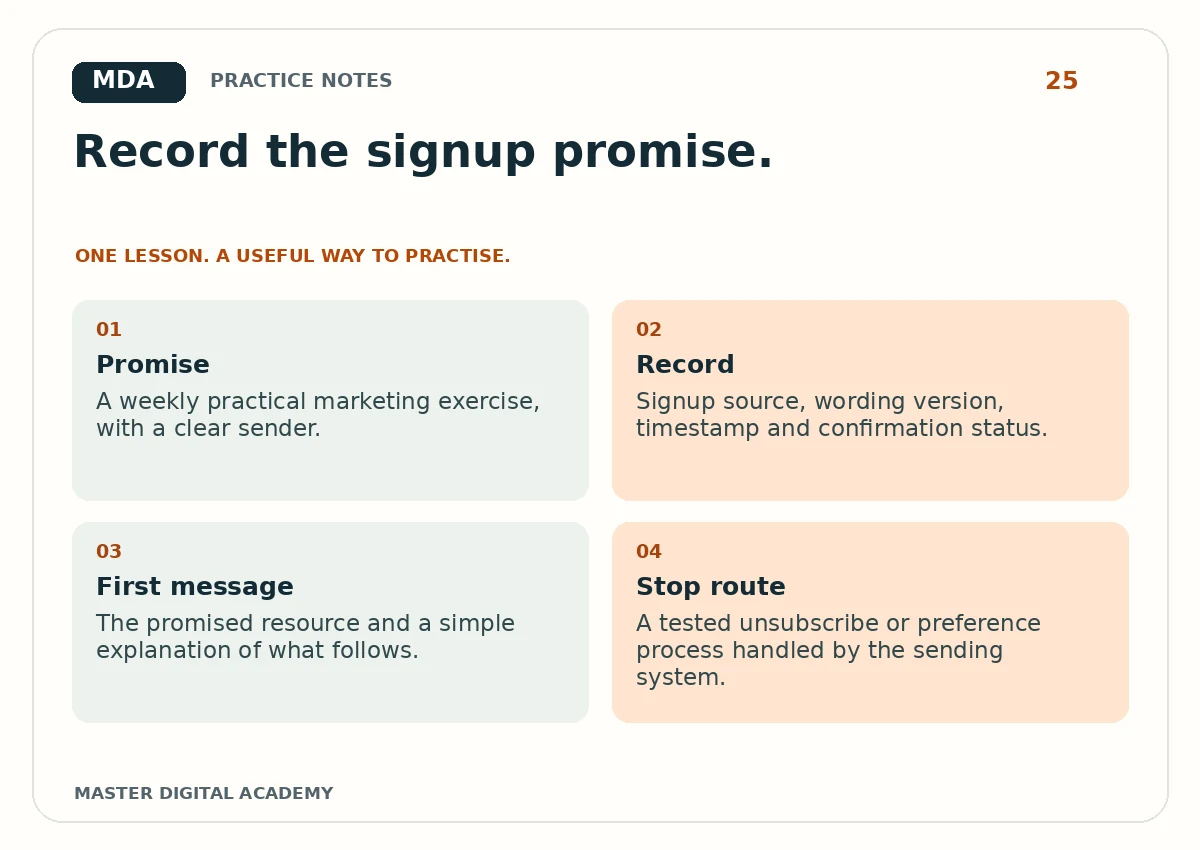
- Promise
- A weekly practical marketing exercise, with a clear sender.
- Record
- Signup source, wording version, timestamp and confirmation status.
- First message
- The promised resource and a simple explanation of what follows.
- Stop route
- A tested unsubscribe or preference process handled by the sending system.
Try it yourself
Draw the signup journey from form to first educational email. Write the exact promise, confirmation copy and first-message opening. Specify what happens if confirmation is not completed or the subscriber asks to stop. Use fictional records to test the status changes. Ask a reader what they expect to receive after seeing only the form. If their answer differs from your workflow, fix the promise before designing the graphic.
Questions learners ask
Is double opt-in required everywhere?
Requirements vary. Check applicable rules and your platform’s requirements rather than treating one workflow as universally sufficient.
Can I practise without collecting real addresses?
Yes. Use fictional data and authorised test addresses to model the process.
Keep learning
Further reading: Mailchimp: double opt-in.