
Portfolio · Practical learning
Write a Portfolio Case Study for a Practice Project Without Inventing Results
Explain the problem, decisions, deliverables and measurement plan of an unlaunched project with honest evidence and useful detail.
A beginner can write a strong case study without having managed a large client budget. The key is to explain the work honestly. A practice project can show research, page planning, copy, measurement thinking and revision. It cannot show campaign results that never happened. This lesson turns a fictional sofa-cleaning project into a short case study. The purpose is to help a reviewer understand your judgement and what you can do, rather than decorate a sample with invented revenue figures.
Label the project and its scope clearly
Open with “independent practice project” or another accurate description. State the business scenario and your role. If the brand is real but the work was not commissioned, explain that relationship. Do not imply client access, employment or approval. Keep the scope specific: perhaps you planned a service page and search-ad message, without building or launching the campaign. A clear boundary makes the rest of the work easier to assess and avoids awkward questions about results you cannot substantiate.
Describe the problem as a decision
Instead of “the business needed digital marketing,” write the concrete issue you investigated. In this fictional example, a visitor could not easily understand the quotation process. Show the evidence you used, or label the issue as a hypothesis when you lack access to real users. Explain why the issue mattered to the page’s purpose. A case study becomes more interesting when the reader can see the choice you faced, not merely a list of software tools used along the way.
Show selected work and the reason behind it
Include a small keyword map, a before-and-after page section and the form plan. Caption each with the decision it demonstrates. You do not need every screenshot from the project. A reviewer should be able to follow the argument without zooming into tiny text. Explain alternatives you rejected when they reveal useful judgement. For example, you may have removed a broad promise because the service could not verify it. That is a meaningful marketing decision even without paid campaign results.
Separate testing from commercial outcomes
You may have tested whether a form validation rule works or whether a classmate understands the page. Those are legitimate observations if accurately described. They are not evidence of a conversion-rate lift in the market. If the campaign was not launched, present a measurement plan instead: which events, qualification rules and report would be used. Keep fictional calculations labelled. The case study should help a reviewer see what remains to be tested rather than conceal the absence of live data.
Include a revision and a useful reflection
Show one change made after feedback and explain why it improved the work. Perhaps the original headline sounded like a confirmed booking while the process only supported a quotation request. Describe the correction and what it taught you. End with the next investigation you would run if given access or budget. Avoid a generic paragraph saying you learned teamwork and passion. A specific reflection demonstrates that the project changed your understanding and that you can respond to evidence.
Worked example
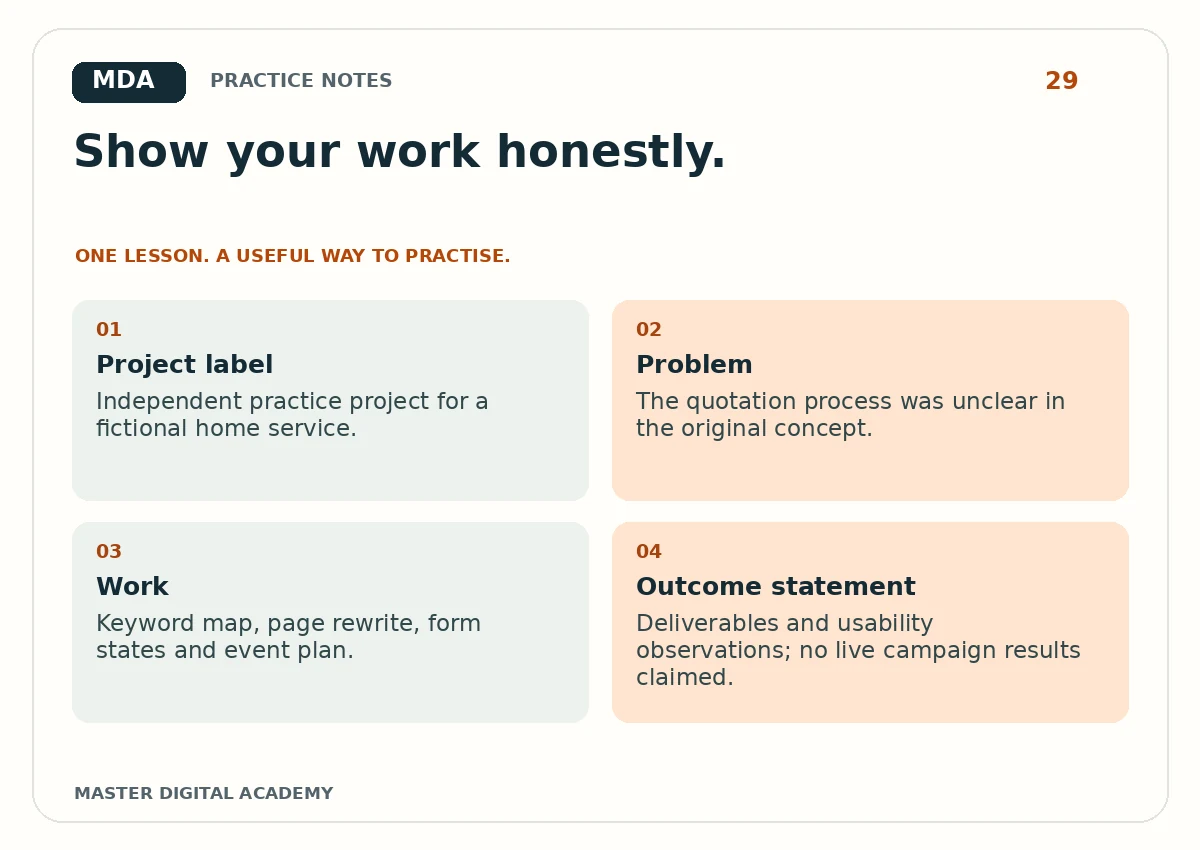
- Project label
- Independent practice project for a fictional home service.
- Problem
- The quotation process was unclear in the original concept.
- Work
- Keyword map, page rewrite, form states and event plan.
- Outcome statement
- Deliverables and usability observations; no live campaign results claimed.
Try it yourself
Write a 500-word case study with four visuals or work samples. Include role, problem, two decisions, one revision and a measurement plan. Highlight every outcome claim and locate its evidence. Replace unsupported market results with a clear explanation of what has and has not been tested. Ask a reviewer to describe your contribution after reading it. If they only remember the tool names, strengthen the reasoning and captions.
Questions learners ask
Will an honest practice label make the work look weaker?
It makes the scope clear. Useful reasoning and complete deliverables can still demonstrate beginner capability.
Can I include a real brand in an independent exercise?
Be accurate about the relationship and permissions; do not imply commissioned work, access or endorsement.
Keep learning
Further reading: Google: clear authorship and evidence.