
Google Ads · Practical learning
Google Ads Ad Groups: Organise Keywords Around a Useful Message
Build a small search-campaign structure with matching keywords, ads and landing pages instead of one mixed keyword bucket.
A search campaign becomes difficult to explain when every keyword lives in one ad group. Someone looking for a sofa-cleaning quotation and someone looking for carpet cleaning may need different messages and pages. The beginner’s task is to create a small structure that preserves those differences without building hundreds of unnecessary groups. This exercise uses a fictional home-service business. It teaches organisation and message relevance; it is not a campaign recommendation to launch unchanged with real money.
Begin with the services the business can deliver
Write the actual service list and the pages that explain each service. If the business cleans sofas and carpets but does not repair washing machines, appliance repair does not belong in the keyword plan. Confirm service areas and quotation arrangements before using them in ads. This sounds basic, yet many beginner plans start with keyword tools and accidentally expand the offer beyond what the business does. A campaign structure should reflect operational reality as well as search language.
Group searches by the answer they need
Put sofa-related enquiries together when one useful ad and landing page can answer them. Create a carpet group when the message needs to change. Do not split every minor word variation automatically. Ask whether each group has a distinct customer task, offer or page. A very small budget spread across many groups can also make learning harder. Start with a structure you can review and explain, then refine it using actual search-term, enquiry and conversion evidence.
Keep a message-and-page column
Beside every proposed group, write the ad’s main promise and destination. For sofa cleaning, the promise might be a quotation for the visitor’s sofa type and area. The destination should explain that service, not send everyone to a generic homepage. If you cannot write a relevant message for a keyword without exaggerating, reconsider the keyword. This simple column prevents a spreadsheet from becoming disconnected from the visitor experience. It also gives a copywriter a clear starting brief.
Plan matching and exclusions deliberately
Keyword match types influence how searches can connect to ads. Learn their current behaviour from the platform documentation rather than relying on old names or assumptions. Include a review process for search terms and sensible negative-keyword candidates. Do not mark a word negative merely because it feels broad. For example, “price” can indicate useful buying interest. The business model and actual enquiry quality should inform exclusions. Your practice plan should explain what you would inspect before making that decision.
Judge the structure through the enquiry journey
A tidy account is not the final outcome. Follow a sample query through the ad, page, form and response process. Does the service stay consistent? Can the business handle the enquiry? Decide which actions count as real conversions and test them before launch. An ad group with many clicks but irrelevant enquiries may need message, targeting or offer changes. Keep the lesson focused on useful feedback instead of treating more groups or more keywords as proof of sophistication.
Worked example
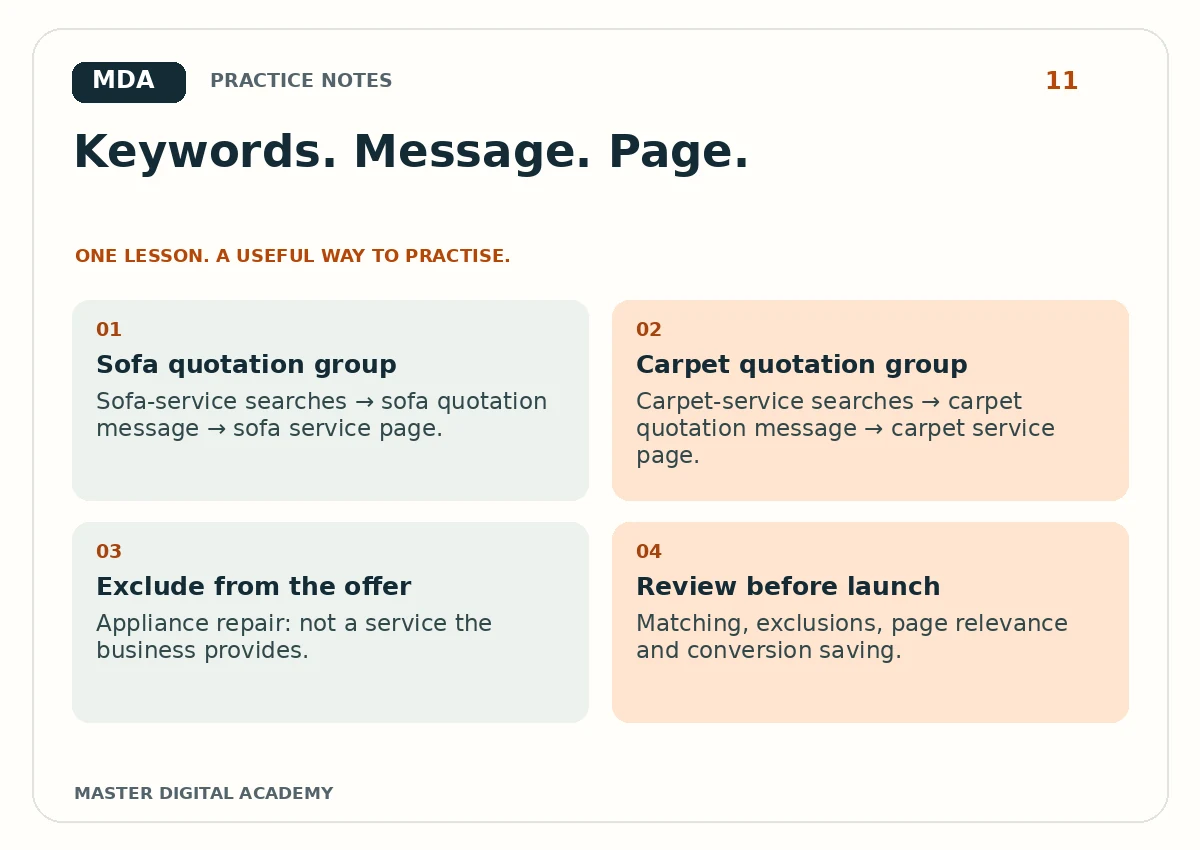
- Sofa quotation group
- Sofa-service searches → sofa quotation message → sofa service page.
- Carpet quotation group
- Carpet-service searches → carpet quotation message → carpet service page.
- Exclude from the offer
- Appliance repair: not a service the business provides.
- Review before launch
- Matching, exclusions, page relevance and conversion saving.
Try it yourself
Create two ad groups with six keyword ideas each. Write a main promise, landing-page URL and three exclusion candidates for each group. Give a reason for every grouping decision. Then choose a query and describe the full path to a saved enquiry. Keep any estimated costs clearly labelled as assumptions. A useful campaign plan explains what will be learned and measured; it does not invent performance figures to make a sample account look successful.
Questions learners ask
Should every keyword have its own ad group?
Not automatically. Grouping should support a useful message, suitable page and manageable review process.
Can I build this exercise without a funded account?
Yes. The planning worksheet can be completed before creating or paying for a campaign.
Keep learning
Further reading: Google Ads: keyword matching.