
Content · Practical learning
An SEO Content Brief Template With a Completed Beginner Example
Plan a useful article with a reader question, evidence, original example and internal links before asking anyone to write it.
A content brief should prevent a writer from producing an article that sounds polished but answers the wrong question. It is not a list of thirty keywords to repeat. A practical brief explains the reader’s situation, the answer they need, the evidence available and the output the article should leave them with. This example plans a guide about comparing sofa-cleaning quotations. It is a fictional exercise, so the task is to design a helpful explanation rather than invent facts about a real service.
Define one reader and one decision
Our reader has two cleaning quotations and cannot tell whether the prices cover the same work. The article should help them compare scope, preparation, scheduling and aftercare questions. It should not become a general history of cleaning or an advertisement pretending to be impartial advice. Write the decision at the top of the brief. When a proposed heading does not help that decision, remove it or save it for another page. Focus is often what makes a practical guide feel human.
Inspect existing answers and identify a useful addition
Read a handful of relevant results and record what they cover. You are learning the question landscape, not collecting paragraphs to rewrite. Perhaps most pages discuss price but do not show a comparison table. That table could be your contribution. Avoid claiming a competitor has omitted something unless you checked the actual page. Keep dated notes and distinguish observations from opinions. The strongest gap is something a reader needs, not merely a heading you have not seen before.
Specify what the writer must verify
List factual claims that require a source or owner confirmation. For this guide, actual cleaning methods, fabric restrictions and drying-time promises need verification. You can safely provide a comparison worksheet without asserting that one method always works best. Ask the writer to label hypothetical figures and avoid unsupported superlatives. A source requirement should be narrow and purposeful: which claim does the source support? A list of impressive links at the bottom does not repair incorrect statements in the article.
Outline the answer in the order people need it
Begin with a short explanation of why two prices may not cover the same job. Follow with a completed comparison, questions to ask and a blank checklist. Put the most useful example near the top rather than hiding it after a long introduction. Choose headings that describe the answer. An outline built around “Introduction, Importance, Benefits, Conclusion” often encourages generic writing because it never specifies what the reader should learn or do at each stage.
Define the finish line
The article is complete when a reader can compare two quotations and ask better questions. Add a review checklist: accurate claims, readable table on mobile, clear example labels, working source links and one relevant next step. If the business needs an enquiry route, place it where getting a quotation is helpful. Do not interrupt every section with a sales message. The brief should make usefulness assessable so feedback can point to a missed requirement rather than simply saying the copy needs more impact.
Worked example
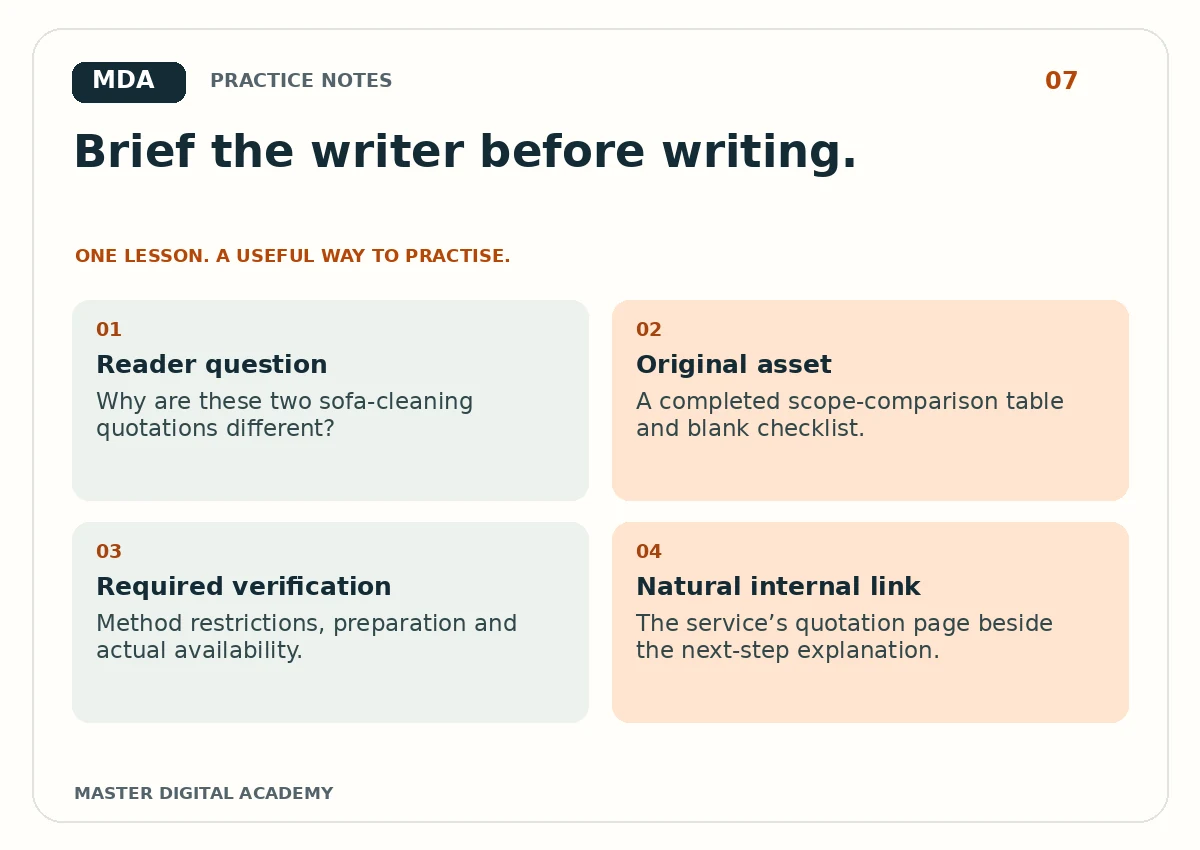
- Reader question
- Why are these two sofa-cleaning quotations different?
- Original asset
- A completed scope-comparison table and blank checklist.
- Required verification
- Method restrictions, preparation and actual availability.
- Natural internal link
- The service’s quotation page beside the next-step explanation.
Try it yourself
Write a brief for one article a local business could genuinely use. Include the reader’s decision, six proposed headings, one original example, three claims to verify and two internal links. Give it to someone unfamiliar with the topic and ask them to explain what they would write. If they can only describe a broad subject, sharpen the decision and example. Keep the finished brief in your portfolio beside the completed article.
Questions learners ask
How long should a content brief be?
Long enough to clarify the work. A focused one- or two-page brief can be sufficient for a practical article.
Should every brief specify a word count?
A range can help planning, but the required answer and examples should determine the finished length.
Keep learning
Further reading: Google: helpful content guidance.