
SEO · Practical learning
SEO Titles and Meta Descriptions: Before-and-After Practice Examples
Rewrite vague search titles and descriptions with clear page promises, accurate details and three practical examples.
A search title is a small promise. If it says “Complete Course Guide,” the page should help someone understand the course. If it says “Fees,” the visitor expects meaningful fee information, not a generic contact paragraph. Writing a better title begins with checking the page beneath it. This lesson uses fictional examples to practise making a page easier to understand. It does not rely on a magic character count, a keyword-density target or the idea that Google must display your exact wording.
Write the page purpose in plain language
Before editing metadata, describe the page in one sentence. “This page explains an online beginner course and how to ask about the next batch” is a useful start. “This page ranks for digital marketing” is not. Read the H1, main sections and next step. They should point to the same task. When a page tries to sell three unrelated services, a title rewrite may expose a structure problem that needs a broader change. Metadata cannot repair an unclear offer by itself.
Replace vague claims with useful details
“Best Training Ever” tells a learner very little. A more descriptive title might identify the subject, delivery mode and academy. Avoid calling a course certified by a platform unless that relationship can be verified. A business name can help recognition, but it should not overwhelm the information. Put yourself in the visitor’s position: if three results look similar, which concrete detail would help them choose the right page? Include that detail only when the page substantiates it.
Use the description to answer the next question
The title identifies the page; the description can explain what the reader will find. For a curriculum page, mention weekly topics, assignments and review criteria. For a lesson, mention the problem and exercise. Do not cram every city and service into one sentence. Write naturally and check how it reads on a small screen. Google may select a different snippet from the page for a particular query, so clear body content matters alongside the description you supply.
Review three kinds of mismatch
Look for a title that overpromises, a description that describes another page and headings that conflict with the page purpose. A “Free Lesson” result should lead directly to useful teaching, not hide everything behind a form. A location title should make the delivery mode clear when the training is online. A pricing description should not imply a published price when the page only offers an enquiry route. Accuracy improves the experience even before you measure search performance.
Record the change and compare fairly
Keep the old title, new title, affected URL and change date. When comparing Search Console results, consider query mix, average position, seasonality and device. A change in click-through rate is not automatically caused by your wording. Search appearance experiments are rarely perfectly controlled on a small site. Explain what you observed and what remains uncertain. In a portfolio, a careful measurement plan is more credible than claiming a title change doubled traffic without a suitable comparison.
Worked example
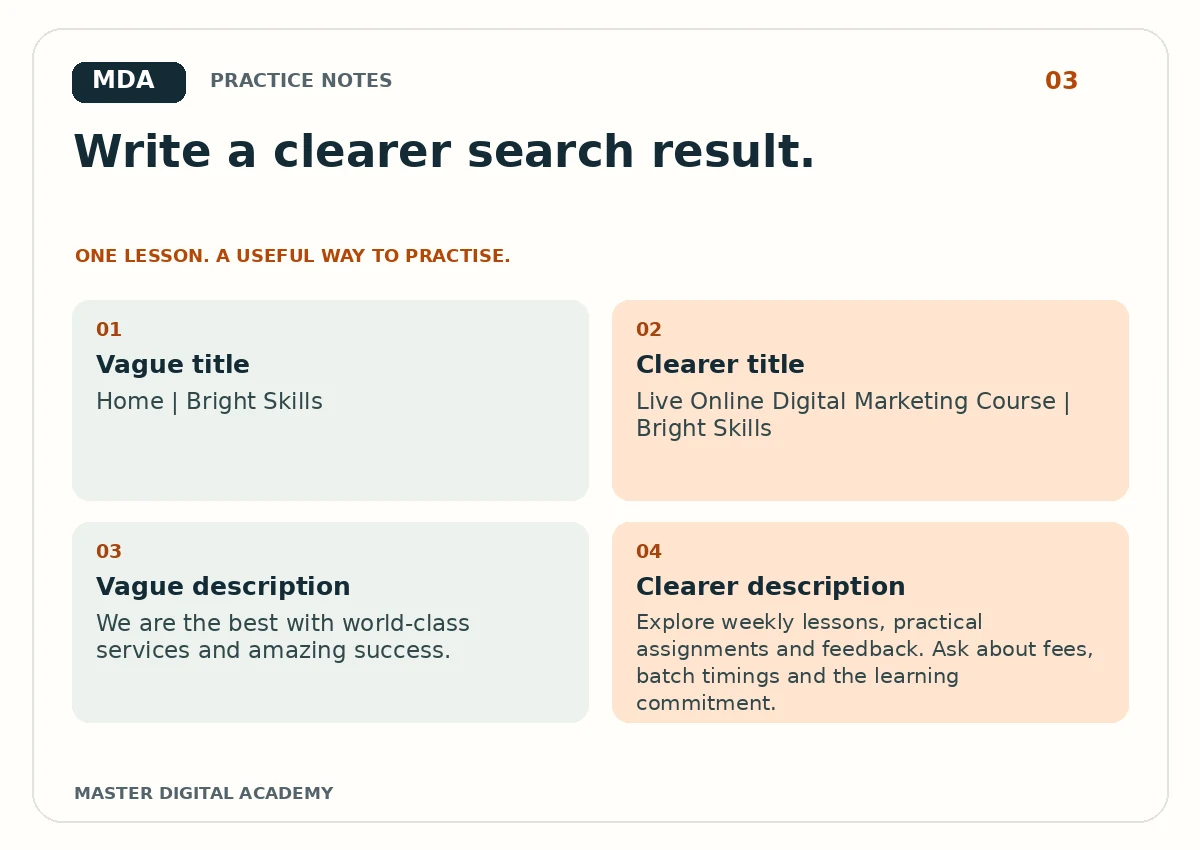
- Vague title
- Home | Bright Skills
- Clearer title
- Live Online Digital Marketing Course | Bright Skills
- Vague description
- We are the best with world-class services and amazing success.
- Clearer description
- Explore weekly lessons, practical assignments and feedback. Ask about fees, batch timings and the learning commitment.
Try it yourself
Pick three pages: a course page, a lesson and a local service. Write one title and one description for each. Underline every factual promise and locate the supporting text on the page. Remove claims you cannot substantiate. Read the three descriptions aloud; they should sound like three different pages. Finally, ask a reader what they expect after clicking. If their expectation differs from the content, rewrite before publishing.
Questions learners ask
Is there one perfect title length?
No fixed length guarantees display. Prioritise concise, descriptive wording and check actual presentation.
Will Google always use my meta description?
No. It can use page text that better fits a particular search.
Keep learning
Further reading: Google: title links.