
Analytics · Practical learning
Traffic Is Growing but Enquiries Are Not: A Beginner Diagnostic Worksheet
Investigate relevance, offer clarity, mobile forms, tracking and follow-up before deciding that more traffic is the answer.
A traffic increase can feel encouraging until the enquiry count stays flat. That does not automatically mean the content is poor or the campaign has failed. The new visits may have a different purpose, the form may be broken or the measurement may be incomplete. This worksheet helps you inspect the journey in a sensible order. It is a diagnostic method, not a promise that one button-colour change will produce more leads. Start with the evidence you can verify.
Check whether the counts mean the same thing
Confirm the reporting dates, tools and definitions. Website sessions, ad clicks and people are different counts. An enquiry should mean a saved or received request rather than a click on the form button. If analytics was installed midway through the period, the comparison is incomplete. Write down the limitations before drawing a conclusion. A mismatch between reports may be a measurement issue rather than a sudden change in learner behaviour or page quality.
Find which pages gained traffic
Look at landing pages and the kinds of searches or campaign messages bringing visitors. A tutorial about a marketing formula may attract learners who want an answer immediately. A course-fees page attracts a different decision. Both can be valuable, but they should not be judged by the same immediate enquiry expectation. Separate informational pages from pages intended to generate requests. If irrelevant searches dominate, investigate the page message and targeting rather than simply adding more calls to action.
Read the offer as a first-time visitor
Can someone understand what is taught, how learning works and what happens after enquiring? Are important details missing or contradictory? A page that repeatedly says “contact us” without helping a learner make a decision can create unnecessary uncertainty. Add accurate information where it genuinely helps, and avoid inventing fees or schedules. Use questions from real admissions conversations when available. The aim is to reduce avoidable confusion, not pressure every visitor into leaving a phone number.
Test the action on an actual phone
Complete the form with permission and verify the receiving system. Check dropdown options, validation, success states and the WhatsApp route. Inspect whether floating controls cover the action. A desktop-only review can miss a mobile keyboard problem or a button hidden below a fixed bar. Test failures on staging as well. If a form is broken, repair and verify it before spending time interpreting its conversion rate. The denominator may be fine while the outcome has been technically impossible.
Review what happens after submission
Confirm who sees the enquiry and how contact attempts are recorded. A slow response or unsuitable batch may affect admissions even when the website produces relevant requests. Keep the marketing and admissions stages visible in the report. If many records are unassessed, do not label them poor quality automatically. Choose one evidence-backed action and compare the journey after the change. More traffic can help a working system, but it does not resolve an unverified form or an unanswered enquiry queue.
Worked example
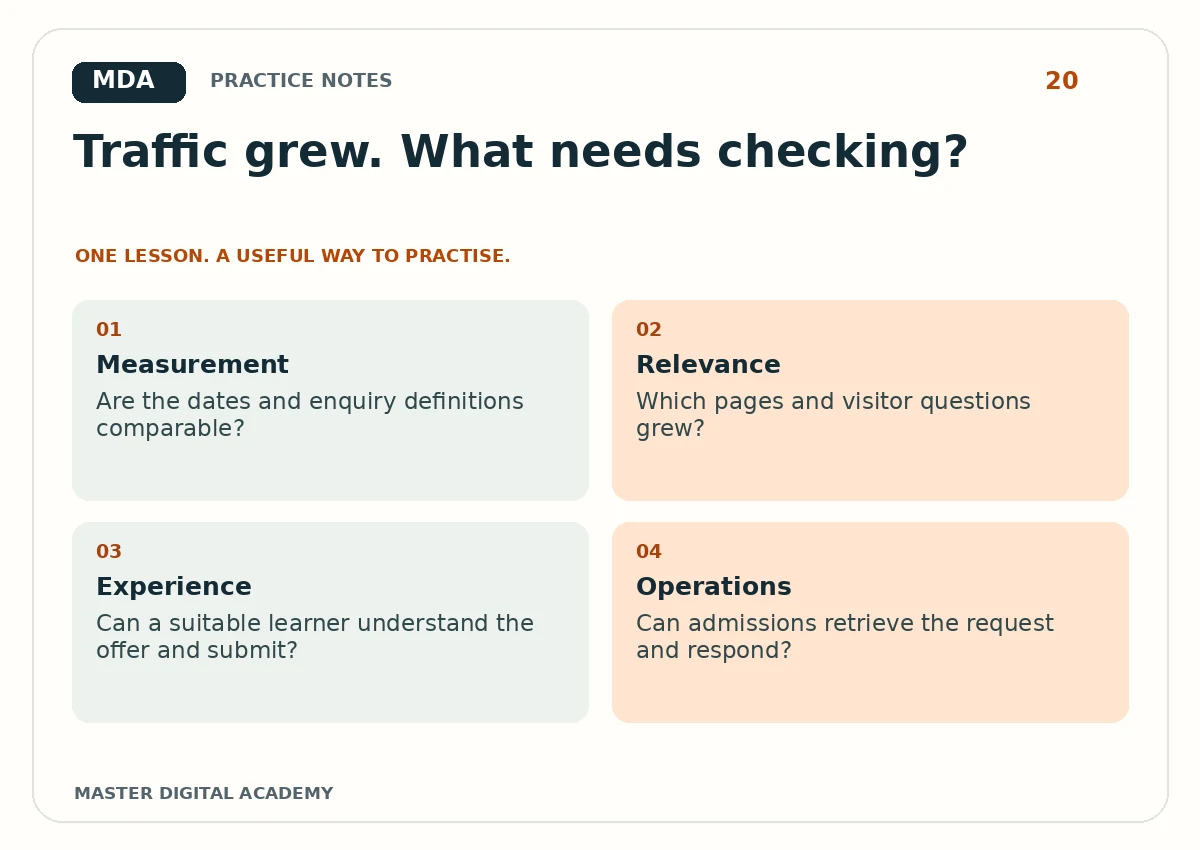
- Measurement
- Are the dates and enquiry definitions comparable?
- Relevance
- Which pages and visitor questions grew?
- Experience
- Can a suitable learner understand the offer and submit?
- Operations
- Can admissions retrieve the request and respond?
Try it yourself
Create a diagnostic sheet with five checks and an evidence column. Use a practice website and fictional traffic data, then run one authorised test enquiry. Identify the first confirmed fault and choose an action that addresses it. If all technical checks pass, state which content or traffic question you would investigate next. Finish with a measurement plan that separates visits, saved enquiries, qualified conversations and admissions.
Questions learners ask
Should every blog visitor become an enquiry?
No. Informational content can serve learning and discovery before a visitor is ready for a course.
Should I increase the budget while the form is unverified?
Verify the receiving journey first so you can judge the traffic using reliable outcomes.
Keep learning
Further reading: Google Analytics: landing-page report.